It asks about your breakfast in your own language, and it already knows you do not eat pork.
If a calorie tracker only translates the buttons, it still asks you questions in English. It still names your meal in English. Snapkin translates the words it writes about your food.
€14.99 a month, or €99.99 a year. Three days free to start, no free version, nothing extra to pay later. The App Store or Google Play takes the payment. It shows you the price and tax for your country before you confirm.
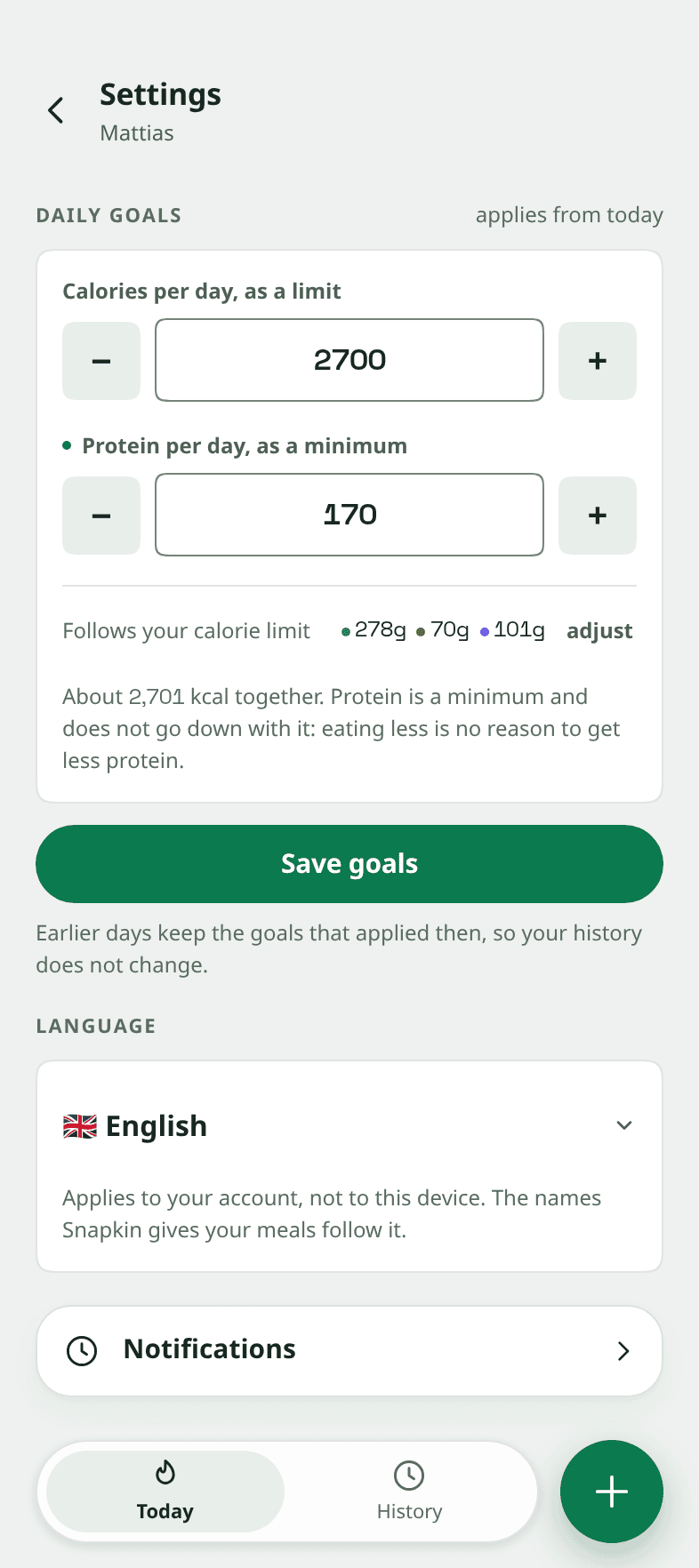
Ten languages, and not only the buttons
English, Chinese, Hindi, Spanish, French, Bengali, Portuguese, Indonesian, German and Dutch.
The name it gives your meal.
It writes "Chicken breast, roast potatoes and green beans" in the language you picked. The meal is named by the same AI that read the photograph.
The question it asks about it.
"How much oil did the potatoes roast in?", with its three answers, in your language. This is the sentence most translated apps get wrong. It is written new for each meal, so it cannot be translated once in advance.
The sentences it remembers about your kitchen.
The memory page describes your own food back to you. On a Hindi account, an English memory page would be one you could not read or fix.
The coach, and the reminder on your lock screen.
The conversation about what to eat next, and the reminder that arrives at lunchtime, both come in the language on your account.
It belongs to your account, not to your phone
Pick a language in Settings and it is your language on every device you sign in on. On a fresh install, it starts from what your phone is set to. After that it is your setting. It does not change with whichever phone you happen to be holding.
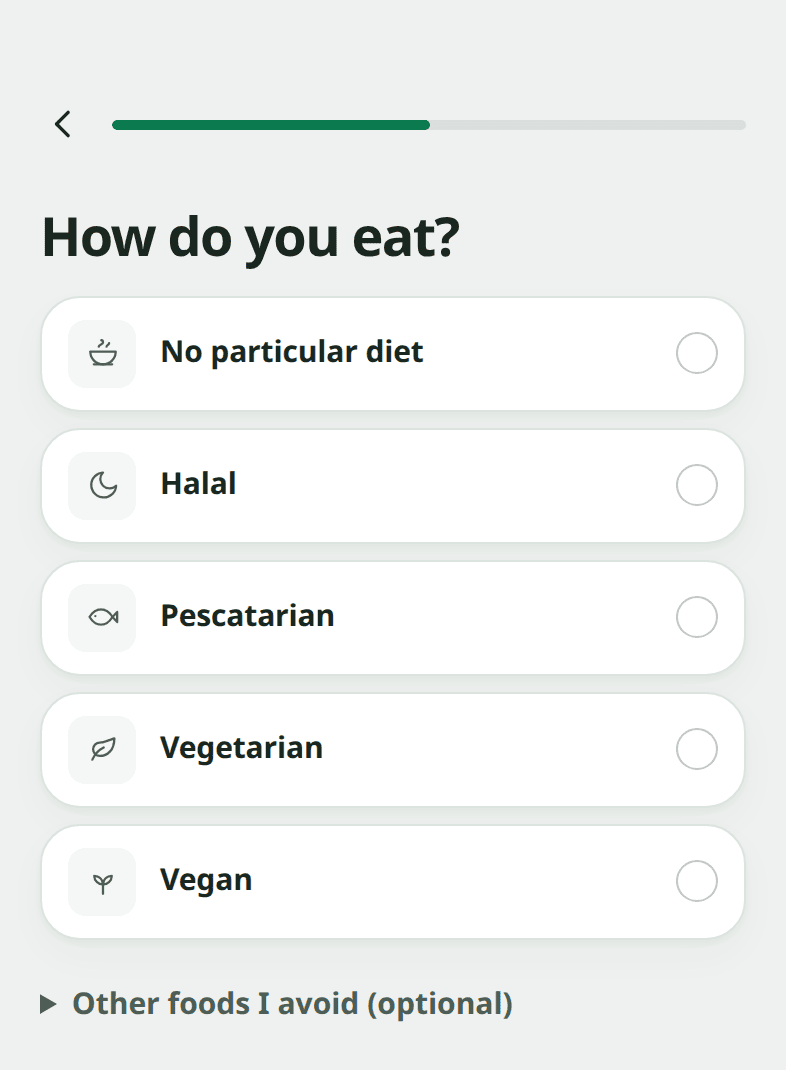
What you do not eat, asked once and never again
Halal, pescatarian, vegetarian, vegan, or nothing in particular. There is also a box for anything else: no shellfish, no dairy, no pork. It is one screen during setup. After that it is a hard rule everywhere. The coach will not suggest it. The library does not offer it. Every question the app asks about a meal takes it into account.
It is a restriction, not a preference, and it is treated as one. A meal you photograph is still read as what it is. The app describes your plate. It does not tell you off.
Which meal it is depends on where you are
Seven in the evening is dinner in Brussels and a snack in Madrid. So the meal type Snapkin picks for you comes from your phone's time zone and that country's own mealtimes. It works with no signal. The mealtimes are stored in the app, not looked up online. The reminders follow the same clock. A lunch reminder arrives half an hour after lunch is over where you actually are.
Set it to your language
It's that simple. It keeps working through restaurants, holidays and busy weeks, because there is nothing else to keep up with.
€14.99 a month or €99.99 a year, billed by the store, cancel there any time.