Point the phone at the plate. That is the entire interaction.
Every other tracker asks you to describe your food to a computer: weigh it, name it, find it in a list, portion it, ... Snapkin asks for a photograph you were taking anyway, and does the describing itself.
€14.99 a month, or €99.99 a year. Three days free to start, no free tier, no upsells later. The App Store or Google Play takes the payment and shows you the price and tax for your country before you confirm.
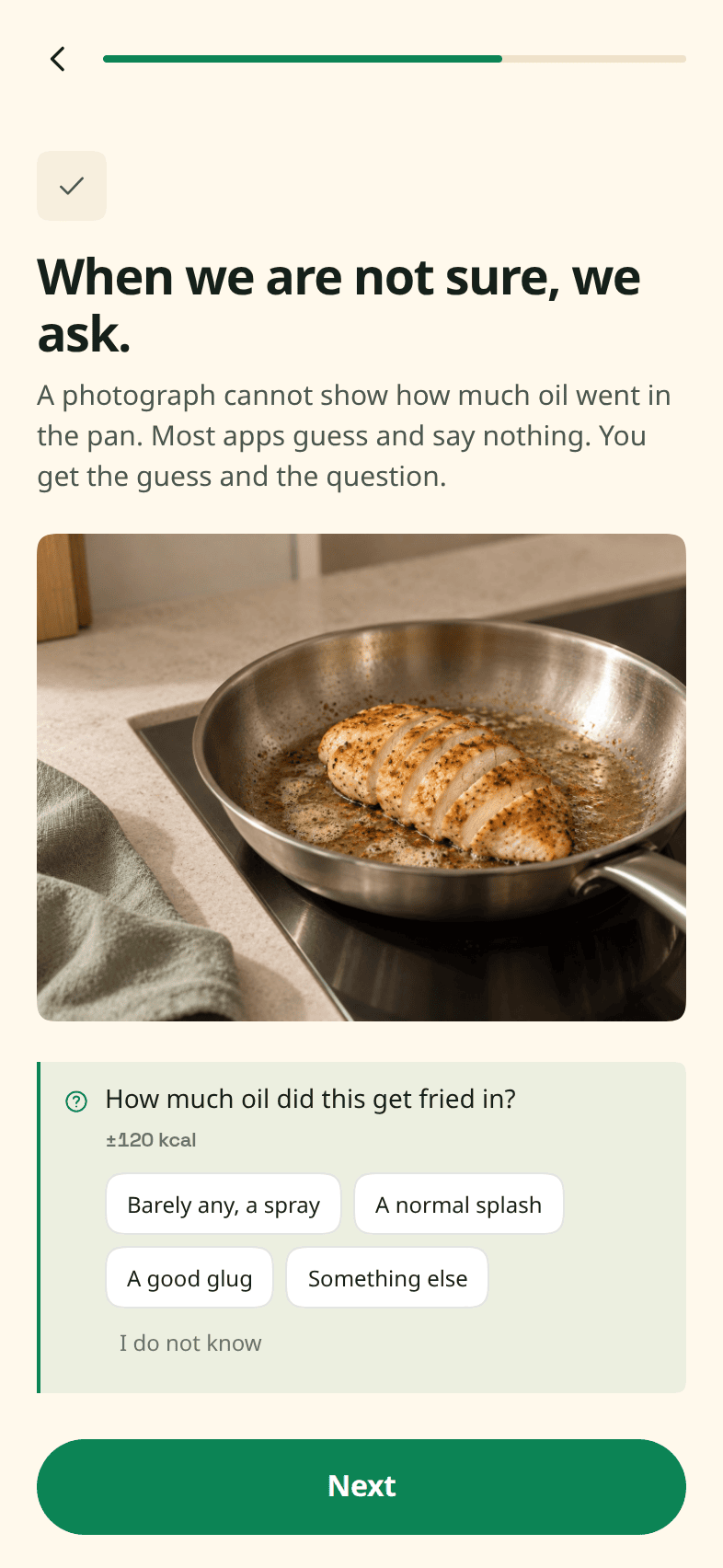
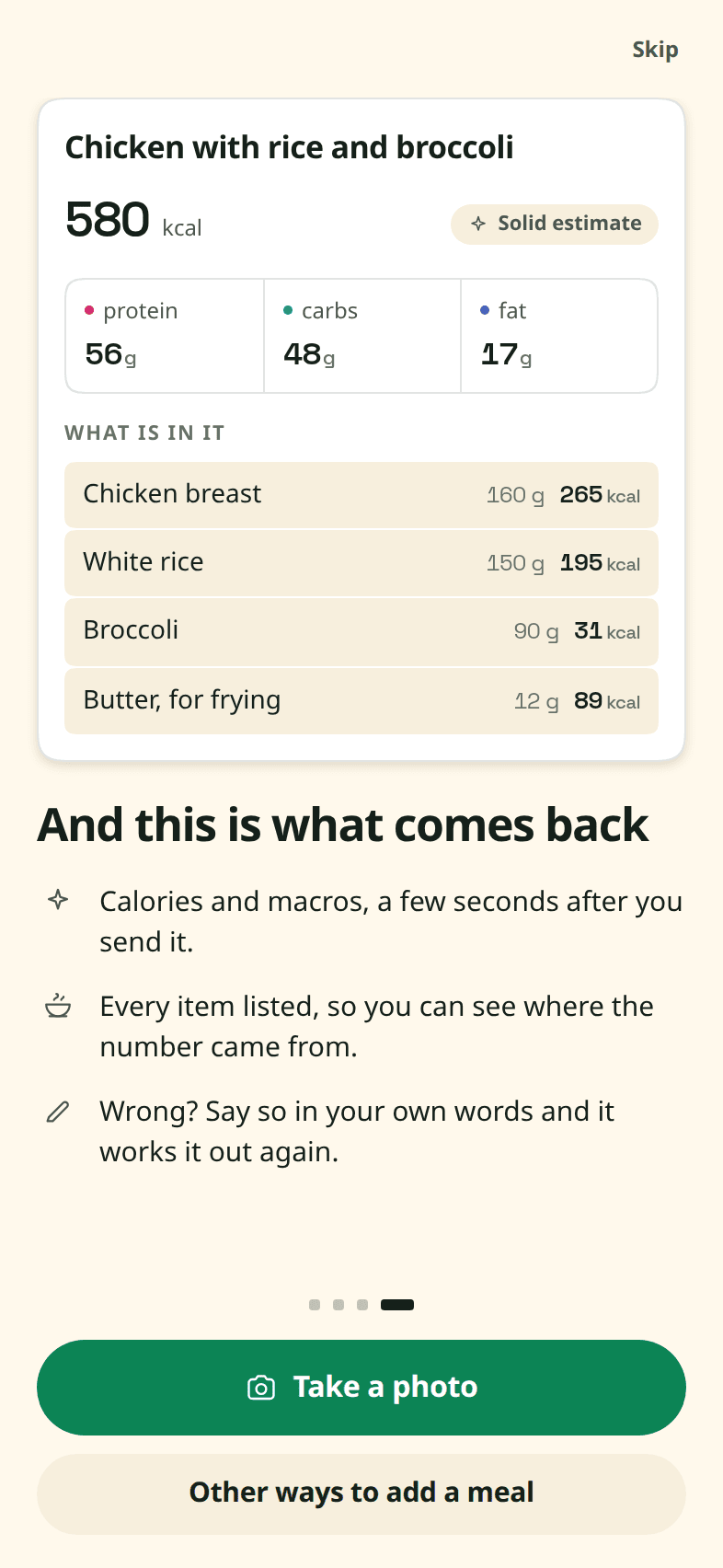
One photo. Maybe one question. That is the whole job.
Everything after the photo is the app's problem, not yours.
Take the photo
Point the phone at the plate. Snapkin names what is on it, sizes each portion against the plate and the cutlery, and counts the cooking fat and the sauce every tracker forgets.
Answer a question, maybe
When one detail would move the number, it asks, and says how much is riding on it. Tap an answer, or tap "I do not know". The estimate stands either way.
Look at the protein
Calories and macros land on your day, against your own targets. Nothing to confirm, nothing to save. Next meal, same photo.
Every question is one tap, and every tap is optional.
Spaghetti and meatballs, and the three questions Snapkin had about it. Tap any answer and watch the estimate move. "I do not know" is always on the list, and the numbers simply stand.
Left alone it answers itself, but it is more satisfying to do it yourself.
What it actually reads off a photograph
A calorie estimate from a picture is three separate judgements, and the one everybody forgets is the third.
- 1. What is on the plate. Not "a plate of food" but the components: the fillet, the rice, the broccoli, the sauce underneath it, ... Each one is a line you can read and argue with. So the meal opens as a list, not as a number.
- 2. How much of it there is. Sized against the things in the frame whose size is already known. A dinner plate is about 27 cm, a fork is about 19, and a chicken breast next to them is not a guess between 100 g and 400 g any more.
- 3. What went in that you cannot see. The oil the pan-fried pork was cooked in. The butter through the mash. The dressing on the salad. This is where a hand-logged meal is usually wrong by two hundred calories, because nobody logs the frying fat, and it is the part a photograph is unusually good at inferring: seared is a look.
Restaurant plates, home cooking, a label, half a leftover pizza
The meals a barcode cannot help with are most meals, and they are the ones this was built for.
A restaurant plate
Nothing to scan, nothing in any database, and the one meal of the week you most want a number for.
Something you cooked
Photograph the ingredients before they go in the pan as well as the plate afterwards, and the estimate gets sharper: the raw weight of the rice is a fact, the cooked pile is an inference.
A packet or a nutrition label
Photograph the label. It reads the per-100 g panel off it and remembers the brand, so the next slice of the same jar costs nothing to log.
Half of something
Photograph what is left when you stop. Or answer "left some" when it asks whether you finished the plate, and the whole meal scales down.
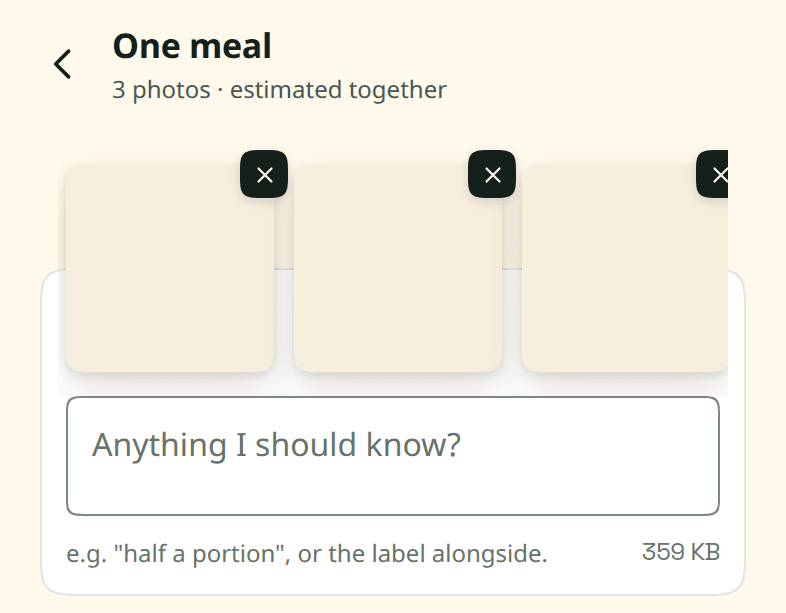
Several photos of one meal
Attach as many as you like and they are analysed together, as one meal, not as four. The plate from above and the label off the sauce jar are two views of the same dinner.
A meal with no photo at all
Describe it in a sentence instead. Worse than a photo. Much better than the nothing you would otherwise have logged.
Snap it at the table. Log it from the couch.
The photo takes two seconds and nobody at the table notices. People have been photographing dinner since 2015, with better lighting and worse reasons. The logging waits for you: at eleven, horizontal, you go through the day in one pass. Answer the question it had, nudge the portion you know it overshot, day closed.
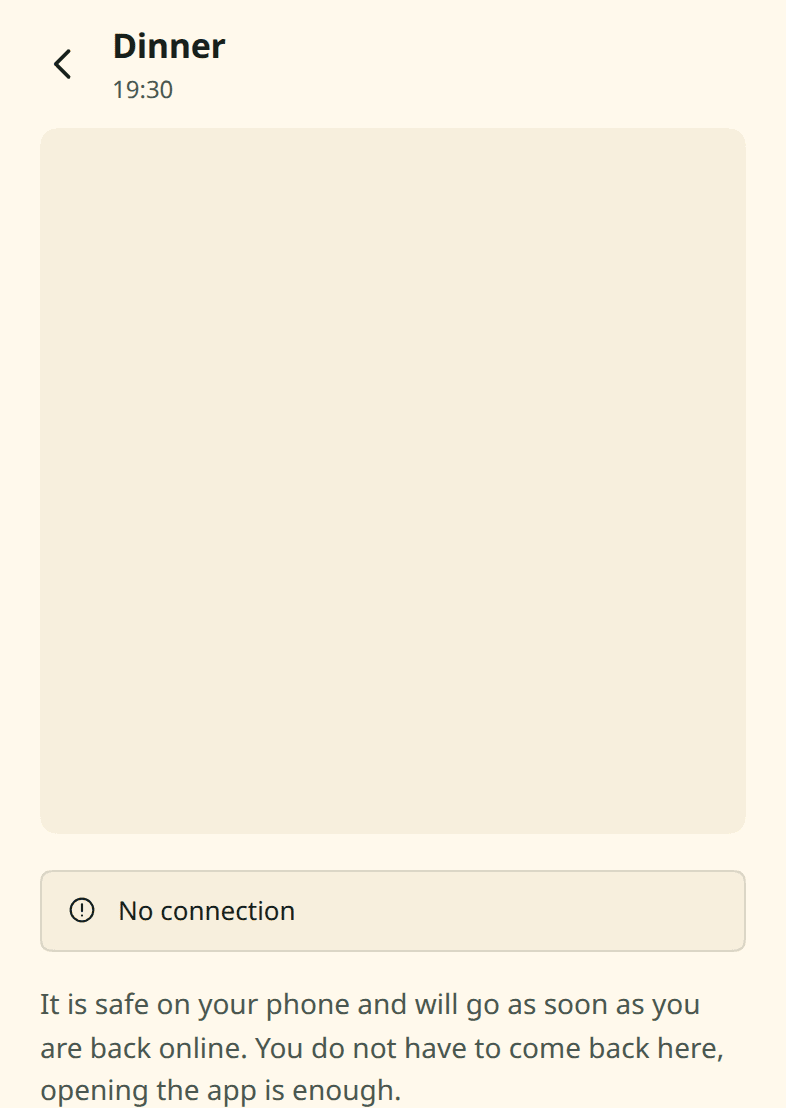
A basement restaurant is not a gap in your day
Photograph the meal with no signal and it queues on the phone. It uploads itself when you are back online and lands on the right day, at the right time, because the timestamp is when you took the photo and not when the upload finished. Nothing to remember, nothing to go back and fix.
Photograph one meal and see
That is the whole habit, and it survives restaurants, holidays and Thursdays, because there is nothing to keep up.
€14.99 a month or €99.99 a year, billed by the store, cancel there any time.