Protein first. The rest is still there, smaller.
- Protein gets the big dial.
- Hit protein, and carbs and fat usually end up about right.
- Pick one second number to watch, like added sugar.
Three reasons protein comes first. None of them is that protein is magic.
It is not a health food and it does not burn fat. But it does help keep you full much longer.
- 1. It keeps you full for longer than carbs or fat do. Big portions and water fill you up most in the moment. But protein keeps you full until dinner. No afternoon snack needed.
- 2. It protects your muscle. When you lose weight, you lose muscle as well as fat. Enough protein means more of the loss is fat and less of it is muscle.
- 3. It is one decision, not three. Build the plate around the protein. The carbs and fat usually end up about right. Watching one number per meal is a habit you can keep. Watching three is work.
The studies behind these three claims, and the ones that disagree
the one number to reach, not to stay under
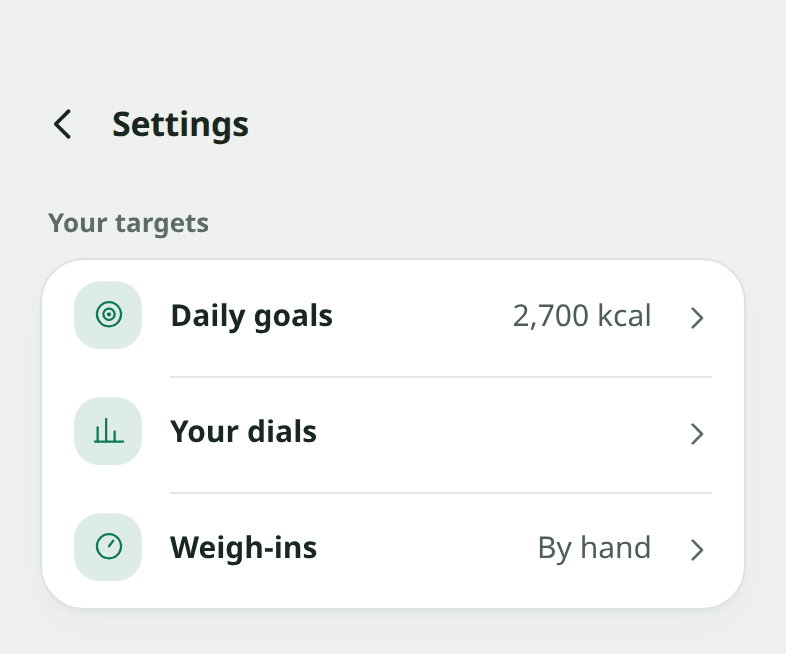
Your personalised calorie target
The app asks you six things at setup: sex, age, height and weight, how much you move, and whether you want to lose, keep or gain weight. Your target comes from those.
- 1. It is set once, then checked every month. After a month, the app compares it with what your weight did. Then it offers you a better one. You decide. It never changes on its own.
- 2. Reaching it is what counts. Going over is fine. Reach the target and the dial says so. Anything above it is not counted against you, and does not need to be.
- 3. Carbs and fat are still there. Smaller, and on the same screen. Something to glance at, not something to manage.
Try the whole app free for 3 days. Not for you? Cancel, and you pay nothing. €9.99 a month or €99.99 €49.99 a year, via the app.launch price, for a limited time
The other number is yours to choose
Protein keeps the big dial. It never moves. The card next to it can show four different things. Which one you see is up to you. Swipe it, or pick one.
swipe the card
Whichever one you leave it on is the one it opens on tomorrow.
The fourth is yours to build: pick two nutrients to follow, like fibre or salt, under Your dials in Settings.
If you pick added sugar, here is what counts
We use the World Health Organization's definition of free sugars, not a rule we invented. A banana does not count against you. The granola does.
The sugar in a whole fruit does not count.
An apple, a banana, a handful of blueberries. The sugar is held inside the fruit's cells. It comes with the fibre. Nobody got fat on fruit.
The sugar in juice does count.
This is the one that surprises people. Pressing an orange breaks the fruit apart. What is left is sugar and water. The WHO counts juice for that reason. So do we.
Honey, syrup and fruit concentrate count.
They sound healthier. They are still sugar. So is the apple juice concentrate in a "no added sugar" cereal bar.
The lactose in milk does not.
Plain milk and plain yoghurt are not counted. The sugar stirred into a flavoured yoghurt is.
The second dial, turned to sugar
Turn the second card, and the dial changes to added sugar. Whichever side you leave it on is the one you see tomorrow. Every meal shows its own sugar number, beside the protein, the carbs and the fat.
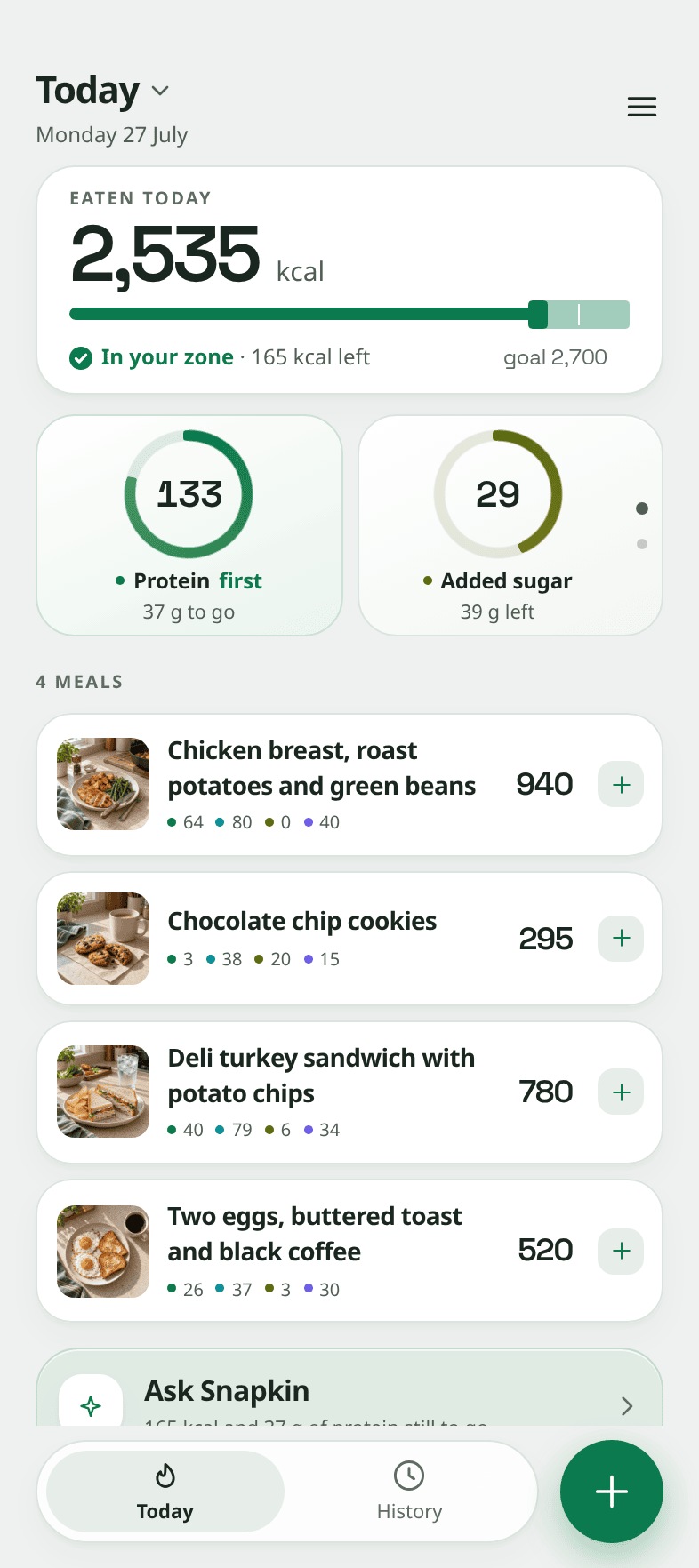
It turns amber. It never turns red. Go over, and the dial goes round again. You passed a limit. You broke no rule. Why we track added sugar, and what we mean by it
See your own number
It's that simple. It keeps working through restaurants, holidays and busy weeks. There is nothing else to keep up with.
Try the whole app free for 3 days. Not for you? Cancel, and you pay nothing. €9.99 a month or €99.99 €49.99 a year, via the app.launch price, for a limited time